This is default featured post 1 title

Go to Blogger edit html and find these sentences.Now replace these sentences with your own descriptions.

This is default featured post 2 title

Go to Blogger edit html and find these sentences.Now replace these sentences with your own descriptions.

This is default featured post 3 title

Go to Blogger edit html and find these sentences.Now replace these sentences with your own descriptions.

This is default featured post 4 title

Go to Blogger edit html and find these sentences.Now replace these sentences with your own descriptions.

This is default featured post 5 title

Go to Blogger edit html and find these sentences.Now replace these sentences with your own descriptions.

Tuesday, 15 March 2011

Top 10 places you can’t Go


The world is full of secret and exclusive places that we either don’t know about, or simply couldn’t visit if we wanted to. This list takes a look at ten of the most significant places around the world that are closed to the general public or are virtually impossible for the general public to visit.

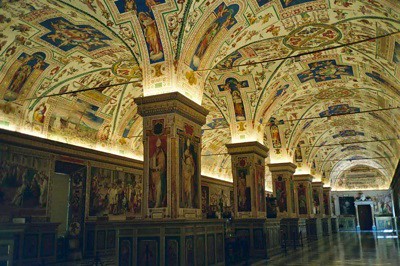
10. Vatican Secret Archives
This has been mentioned on a previous list – the archives are not secret despite their names. You can view any document you wish. But you cannot enter the archive. You must submit your request for a document and it will be supplied to you. Despite the foolishness of the recent junk from Ron Howard and Dan Brown (Angels and Demons) the documents are all available and there are no copies of suppressed scientific theories or great works that were banned. The only documents you can’t access are those which are not yet 75 years old (in order to protect diplomatic and governmental information). Indexes are available for people who want to see if a document exists in the archives. The Vatican Secret Archives have been estimated to contain 52 miles (84 km) of shelving, and there are 35,000 volumes in the selective catalogue alone.


9. Mezhgorye
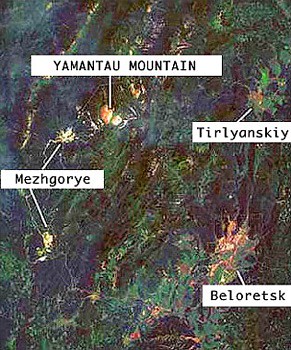
Mezhgorye is a closed town in Russia which is believed to house people working on the highly secret Mount Yamantaw. The town was founded in 1979. Mount Yamantaw stands at 1,640 metres (5,381 ft) and is the highest mountain in the southern Urals. Along with Kosvinsky Mountain (600 km to the north), it is suspected by the United States of being a large secret nuclear facility and/or bunker. Large excavation projects have been observed by U.S. satellite imagery as recently as the late 1990s, during the time of Boris Yeltsin’s pro-Western government after the fall of the Soviet Union. Two garrisons, Beloretsk-15 and Beloretsk-16, were built on top of the facility. Repeated U.S. questions have yielded several different responses from the Russian government regarding Mount Yamantaw. They have said it is a mining site, a repository for Russian treasures, a food storage area, and a bunker for leaders in case of nuclear war.


8. Club 33
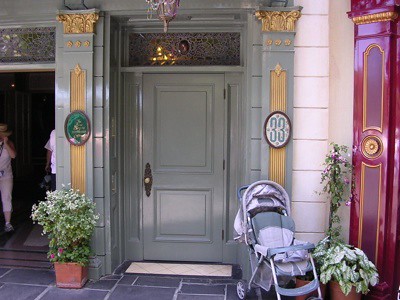
Contrary to popular belief, Disneyland has a full liquor license which is used when the place closes down to the general public to accommodate private parties. But there is one place in Disneyland that is always open to sell booze: Club 33. Club 33 is a private club located in the heart of the New Orleans Square section of Disneyland. Officially maintained as a secret feature of the theme park, the entrance of the club is located next to the Blue Bayou Restaurant at “33 Royal Street” with the entrance recognizable by an ornate address plate with the number 33 engraved on it. Fees for joining range from 10 – 30 thousand US dollars and membership comes with a car park. If you want to join the club, you have to go to the end of the fourteen year waiting list.


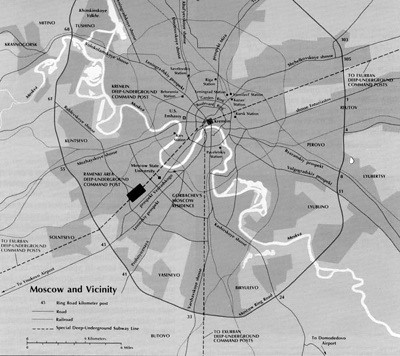
7. Moscow Metro-2
Metro-2 in Moscow, Russia is a purported secret underground metro system which parallels the public Moscow Metro. The system was built supposedly during (or from) the time of Stalin and codenamed D-6 by the KGB. Russian journalists have reported that the existence of Metro-2 is neither confirmed nor denied by the Federal Security Service of the Russian Federation (FSB) or the Moscow Metro administration. The length of Metro-2 is rumored to exceed even that of the “civil” (i.e. public) Metro. (It is said to have 4 lines and lie 50 to 200 m deep. It is said to connect the Kremlin with the FSB headquarters, the government airport at Vnukovo-2, and an underground town at Ramenki, in addition to other locations of national importance. Needless to say, the fact that no one confirms its existence makes it pretty difficult to visit.


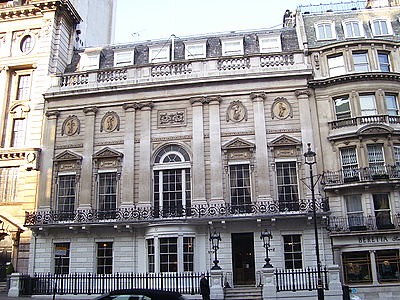
6. White’s Gentlemen’s Club
White’s is the most exclusive English gentlemen’s club. It was founded in 1693 by Italian Francesco Bianco (Francis White) to sell the newly discovered hot chocolate but eventually became a typical (but extremely private) gentlemen’s club. The club is famous for its “betting book” in which members make bizarre gambles. The most famous of which is a 3,000 pound bet on which of two raindrops would slide down the window first. So why is this club on the list? Women are excluded completely from membership, so that is half our audience out. Secondly, men who want to join this exclusive club can only do so if invited by a sitting member who has the support of two other members. Unless you are a member of royalty, or are extremely powerful in politics or the arts, you are unlikely to ever see the exclusive White’s invitation.


5. Area 51
I have put this so high on the list because it is the one place most readers are likely to expect to see. Area 51 is a nickname for a military base that is located in the southern portion of Nevada in the western United States, 83 miles (133 km) north-northwest of downtown Las Vegas. Situated at its center, on the southern shore of Groom Lake, is a large secretive military airfield. The base’s primary purpose is to support development and testing of experimental aircraft and weapons systems. The intense secrecy surrounding the base, the very existence of which the U.S. government barely acknowledges, has made it the frequent subject of conspiracy theories and a central component to unidentified flying object (UFO) folklore. The sign above states that deadly force can be used if people enter the Area 51 zone.


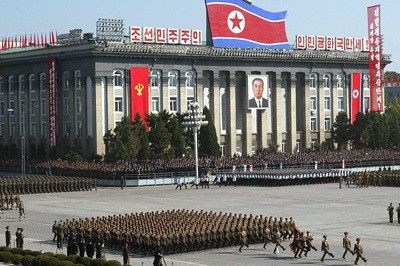
4. Room 39
Room 39 or Bureau 39 is arguably one of the most secretive organizations in North Korea that seeks ways to obtain foreign currency for Kim Jong-il, North Korea’s Chairman of the National Defense Commission. Room 39 was established in the late 1970s. It has been described as the lynchpin of the North’s so-called “court economy” centered on the dynastic Kim family. It is unknown how the name originated. Very little is known about Room 39 due to the secretive nature surrounding the organization, but it is widely speculated that the organization uses 10 to 20 bank accounts in China and Switzerland for the purposes of counterfeiting, money laundering, and other illicit transactions. It is also alleged that Room 39 is involved in drug smuggling and illicit weapon sales. It is known, however, that the organization has 120 foreign trade companies under its jurisdiction and is under the direct control of Kim Jong-il. North Korea has denied taking part in any illegal activities. Room 39 is believed to be located inside a ruling Workers’ Party building in Pyongyang, the capital city of North Korea.


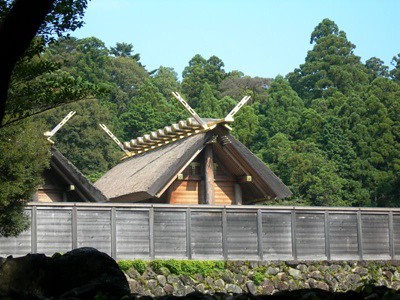
3. Ise Grand Shrine
The Ise Grand Shrine in Japan (which is actually a series of over 100 shrines) is the most sacred shrine in Japan. It is dedicated to Amaterasu (the Sun goddess) and has been in existence since 4BC. The main shrine is alleged to hold the most important item in Japan’s imperial history: the NaikÅ« (the mirror from Japanese mythology which eventually ended up in the hands of the first emperors). The shrine is demolished and rebuilt every 20 years in keeping with the Shinto idea of death and rebirth (the next rebuilding will be in 2013). This ranks very high on the list of places you will never go because the only person who can enter is the priest or priestess and he must be a member of the Japanese imperial family. So unless we have a Japanese prince or princess reading the site, no one here will ever see anything more than the thatched roof of the Ise Grand Shrine.


2. Mount Weather Emergency Operations Center
This is a place that is not only closed to the public, but it is a place that the public hope to never have to enter! In most “end of the world” films we see these days, there is always a highly classified area where US government officials and a chosen few get to go in the hopes that they can escape the impending doom. The Mount Weather Emergency Operations Center is the real thing. It was set up in the 1950s due to the cold war but continues to operate today. It is a “last hope” area. For obvious reasons its operations are highly classified. It is run by the Federal Emergency Management Agency (FEMA). The center is already functioning and even in small local disasters in the US, much of the telecommunications traffic is routed through it.


1.RAF Menwith Hill
RAF Menwith Hill is a British military base with connections to the global ECHELON spy network. The site contains an extensive satellite ground station and is a communications intercept and missile warning site and has been described as the largest electronic monitoring station in the world. The site acts as a ground station for a number of satellites operated by the US National Reconnaissance Office, on behalf of the US National Security Agency, with antennae contained in a large number of highly distinctive white radomes, and is alleged to be an element of the ECHELON system. ECHELON was reportedly created to monitor the military and diplomatic communications of the Soviet Union and its Eastern Bloc allies during the Cold War in the early 1960s, but since the end of the Cold War it is believed to search also for hints of terrorist plots, drug dealers’ plans, and political and diplomatic intelligence. It has also been involved in reports of commercial espionage and is believed to filter all telephone and radio communications in the nations which host it – an extreme violation of privacy.


Top 10 amazing temples in the world


More than a quarter of all people in the world belong to Eastern religions, which include Buddhism, Hinduism, Sikhism, and Taoism. These people worship in temples, which are architecturally as diverse as the religions are different from each other. From the ancient ruins of Ankor Wat to the distinctly modern Wat Rong Khun, there are hundreds if not thousands of amazing temples in the world.
I have long been fascinated by the temples and sacred sites of Eastern religions. After doing an article on some amazing churches from around the world (10 Divinely Designed Churches), it’s only right that we do a follow up on the ten most fascinating temples in Asia. Here they are, in no particular order:

Tiger’s Nest Monastery
Tiger’s Nest Monastery, perched precariously on the edge of a 3,000-feet-high cliff in Paro Valley, is one of the holiest places in Bhutan. Legend has it that Guru Rinpoche[wiki], the second Buddha, flew onto the cliff on the back of a tigress, and then meditated in a cave which now exists within the monastery walls.
The monastery, formally called Taktshang Goemba, was built in 1692 and reconstructed in 1998 after a fire. Now, the monastery is restricted to practicing Buddhists on religious retreats and is off-limits to ordinary tourists.


Wat Rong Khun
Wat Rong Khun in Chiang Rai, Thailand is unlike any Buddhist temples in the world. The all-white, highly ornate structure gilded in mosaic mirrors that seem to shine magically, is done in a distinctly contemporary style. It is the brainchild of renowned Thai artist Chalermchai Kositpipat.
Actually, the temple is still under construction. Chalermchai expects it will take another 90 years to complete, making it the Buddhist temple equivalent of the Sagrada Familia church in Barcelona, Spain!


Prambanan
Prambanan is a Hindu temple in Central Java, Indonesia. The temple was built in 850 CE, and is composed of 8 main shrines and 250 surrounding smaller ones.
Nearly all the walls of the temple are covered in exquisite bas relief carvings, which narrate stories of Vishnu’s incarnations, adventures of Hanuman the Monkey King, theRamayana [wiki] epic and other legends.
Though not the biggest temple in Indonesia (Borobudur is larger – see below), Prambanan makes up in beauty and grace for what it lacks in size


Shwedagon Pagoda
No one knows exactly when the Shwedagon Paya [wiki] (or Pagoda) in Myanmar was built – legend has it that it is 2,500 years old though archaeologists estimate that it was built between the 6th and 10th century.
Now, when people say "golden temple" they usually mean that the structure is golden in color. But when it comes to the Shwedagon Pagoda, golden literally means covered in gold! In the 15th century, a queen of the Mon people donated her weight in gold to the temple. This tradition continues until today, where pilgrims often save for years to buy small packets of gold leafs to stick to the temple walls.
As if all that gold wasn’t enough, the spire of the stupa or dome is covered with over 5,000 diamonds and 2,000 rubies (there’s even a 76 carat diamond at the very tip!). And oh, the temple housed one of the holiest relics in Buddhism: eight strands of Buddha’s hair.


Temple of Heaven
The Temple of Heaven [wiki] is a Taoist temple in Beijing, the capital of China. The temple was constructed in 14th century by Emperor Yongle of the Ming Dynasty (who also built the Forbidden City) as his personal temple, where he would pray for good harvest and to atone for the sins of his people.
The Temple’s architecture is quite interesting: everything in the temple, which represents Heaven, is circular whereas the ground levels, which represent the Earth, are square.


Chion-in Temple
Chion-in Temple [wiki] was built in 1234 CE to honor the founder of Jodo (Pure Land) Buddhism, a priest named Honen, who fasted to death in the very spot. At one point in time, the complex had 21 buildings but due to earthquakes and fire, the oldest surviving building is from the 17th century.
Visitors to the Chion-in Temple must first pass through the largest gate in Japan: the two-story San-mon Gate. The temple bell is also a record setter: it weighs 74 tons and needs 17 monks to ring it during the New Year celebrations.
Another interesting feature of the Chion-in Temple is the "singing" floor of the Assembly Hall. Called a uguisu-bari or nightingale floor, the wooden planks were designed to creak at every footstep to alert the monks of intruders!


Borobudur
In the 19th century, Dutch occupiers of Indonesia found a massive ancient ruin deep in the jungles of Java. What they discovered was the complex of Borobudur, a gigantic structure built with nearly 2 million cubic feet (55,000 m³) of stones. The temple has nearly 2,700 relief panels and 504 Buddha statues.
Until today, no one knows for sure when and why it was built, nor the reason for its complete abandonment hundreds of years ago. Some scholars believe that Borobudur is actually a giant textbook of Buddhism, as its bas reliefs tell the story of the life of Buddha and the principles of his teachings. To "read," a pilgrim must make his way through nine platforms and walk a distance of over 2 miles.


Golden Temple
The Harmandir Sahib (meaning The Abode of God) or simply the Golden Temple[wiki] in Punjab, India is the most sacred shrine of Sikhism. For the Sikhs, the Golden Temple symbolizes infinite freedom and spiritual independence.
The site of the Temple began with a small lake that was so peaceful that even Buddha came there to meditate. Thousands of years later, Guru Nanak, the founder of Sikhism also lived and meditate by the lake.
Construction of the Golden Temple began in the 1500s, when the fourth Guru of Sikhism enlarged the lake that became Amritsar or Pool of the Nectar of Immortality, around which the temple and the city grew. The Temple itself is decorated with marble sculptures, gilded in gold, and covered in precious stones.


If your temple is not included, it is not a slight – I welcome your suggestion in the comment section below.[source]

Ningaloo Reef: Exciting secret of Western Australia


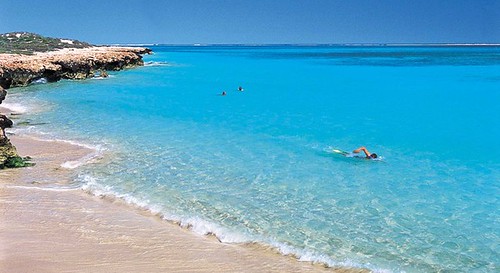
If you want a total aquatic fun, then this time plan a trip to Coral Bay. On my trip to this great destination, I found it to be the most calming as well as thrilling. It is very sad to know that this charming west Australian coast is famous only for backpackers. In fact, if you were to ask me, I would say that there is no reason as to why this should not be on the tourist circuit.
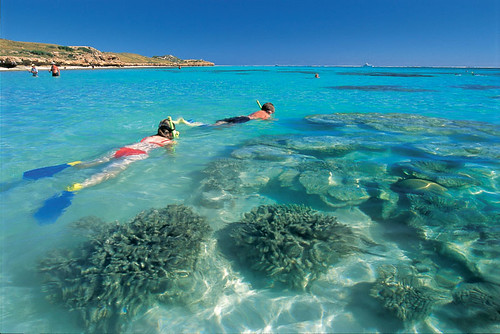
Marine exploration, captivating reef, and marine national parks have left much scope for the water enthusiasts to rejoice in adventure sports such as snorkelling and diving. It is just the matter of coming to Coral Bay and experiencing it. I am sure that even you will agree with me after your trip that this is a genuine marine paradise.


I first explored the eye-catching Coral Bay Walk Way that is 2 km long stretching along the coastline and the famous Ningaloo Reef. While you walk here, check out for the several lookout points that offer you a great vista of dolphins, fishes, and manta rays wandering in the lucid waters. This is perhaps because of the nearness of the reef to the shore. After this, do also take a trip of the Pioneer and Naturalist Parks.


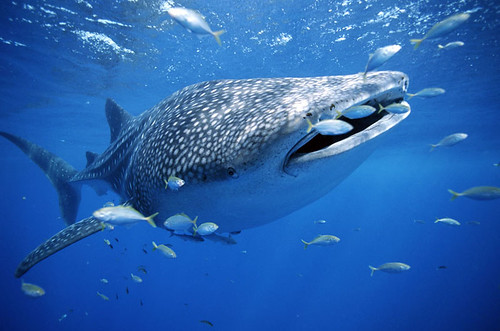
The Ningaloo Reef, one of the world’s largest reefs, is easily explorable from Coral Bay as it is situated just a mile away from the beach. Take up this memorable opportunity to swim safely with the Whalesharks amidst the tropical reef fish or be more adventurous to dive or snorkel this pristine and colourful reef area. Come here from April to June as this is the time when the Ningaloo reef whale sharks come here to rest and catch their prey of krill available in maximum in this reef. If you do not like to get drenched, then cruising is your option via which you can yet explore the sanctuary. For snorkelling with the Ningaloo reef whale sharks, the largest fishes on Earth residing in the Ningaloo Reef; catch a leased boat to be with these welcoming monsters.


Further while exploring the reef no matter in which way; do try to spot the marine turtles – Hawksbills, Green, and Loggerhead who stay in the Ningaloo Reef. Unlike the Ningaloo reef whale sharks, you can spot these anytime in the year. In November, they are seen making nest, while January is the time to give birth to new ones.
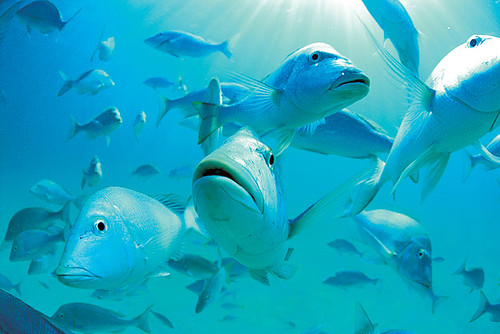
In the Ningaloo Reef, do also spot around 250 coral species as well as 500 species of fish, which are seen in numbers just a mile away from the shore. To catch hold of this nautical marvel, catch a boat whose bottom is flat, which is actually a dedicated vessel for the shallow waters. Such boats come with huge glass panels that make it possible for you to spot these colourful creatures below the surface.
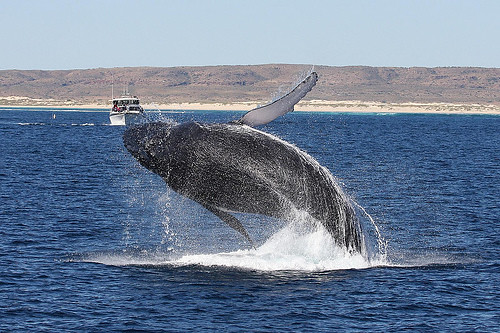
If you are coming here in between July and November, extend your trip beyond the reef for watching the magnificent humpback and right whales all of whom wander in the north at this time. Try to spot a humpback in the pose of standing on its head with the tails in the air high up for some two hours.


The Cape Range National Park, one more great attraction in Coral Bay, is reachable after driving for some two hours in the direction of north. Nestled by the side of a preserved route called the Yardie Road, this is where you will find all possible coastal highlights. Then, follow the roads named Charles Knife and Shothole Canyon that lead one to the eastern side attractions. In order to know about the amenities and highlights here, inquire at the CALM office in Exmouth.


One more worth visiting attraction in Coral Bay is the Ningaloo Marine Park – a significant place of ecosystem and tourism for safeguarding an important reef area that is none other than the Ningaloo Reef. It begins from the Bundegi Beach that is close to Exmouth, covers some 260 km of the coast, and ends at the Amherst Point in the south. This is the home of more than 200 coral species along with 500 species of fish. Grasp the chance to study about the superb world of the Ningaloo Reef through a coral viewing boast, catamaran, dive boat, snorkeling, flight in the air, and sea kayak.

Top 10 most dangerous places on earth

In keeping with this site’s love of helping out with holiday plans, this is a list on the top 10 most dangerous places in the world – these are all places you might consider not visiting when planning your next holiday. Some of the items may be a little controversial, but you are, of course, free to ignore our advice and go anyway!
10. Russia
In this crime-ridden, ex-Soviet state, no longer does the government stuff their Armani suits with rubles, but the vandals and gangsters. The Russian mafia runs amuck, there are more gangsters than police, and a Russian is assassinated every 18 minutes, averaging 84 murders per day in a nation of 143 million. The nucleus of Russian crime is stationed in the Republic of Chechnya, a region within Russia just north of Georgia. Prostitution, drug trafficking, and underground restaurants are arbitrarily controlled by the Chechens. Foreigners are kidnapped more frequently due to the higher ransom allocated. Crimes towards include but are not limited to: pick pocketing wallets, cell phones, cameras, cash, and physical assaults. From superpower to Third World country, think tanks are beginning to speculate if communism really was the cure for Russia.


9. Brazil
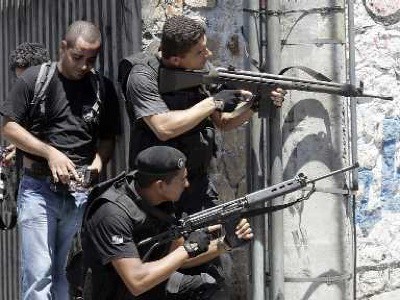
For anyone traveling to Brazil, it is not a matter of whether you get mugged, it is a matter of when! Grinding poverty still lives alongside incredible wealth in a country that is riding a wave of economic growth. But with prosperity, rates of crime have also soared. Street crime is rampant in parts of Rio de Janeiro and Sao Paolo, and whilst many victims are left unharmed, having a broken bottle put to your throat for your bracelet is not pleasant. The incidences of “quicknappings” have risen in major cities. This involves being abducted and taken to an ATM to pay your ransom. If you can’t pay, thanks to mobile technology, your family is only a call away. Along with street crime, organized criminal groups have waged wars against police and public institutions that were unable to be bribed. Prison riots are brutally suppressed, drugs and narco-terrorism claim civilian casualties and if you survive all that – the piranhas are waiting.


8. South Africa
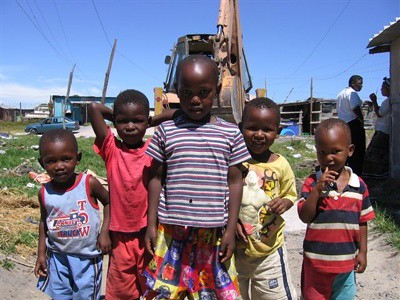
Any nation described as the ‘rape capital of the world’ should be one to take extra special care in. Although rape had shown a declining trend to 113.7 in 2004, it increased in 2005 to 118.3 per 100 000. Another damning statistic for South Africa is its appallingly high murder rate. The 2010 World Cup host is consistently in the Top 5 list of countries by homicide rate. Most crime is confined to poor areas but it hasn’t stopped gated communities springing up all over South Africa and armed guards protecting wealthy tourist groups. Farming in South Africa has become one of the most dangerous professions in the world. The murder rate for farmers is 313 per 100 000 – about 8 times the national average. And like anywhere, sex can be very dangerous in South Africa, where more than 10 million people are infected with HIV.


7. Burundi
This small, densely populated and poor nation has giant problems. A civil war between Hutus and Tutsis tore the nation apart between 1993 and 2006. A ceasefire was declared however most provisions have not been implemented. Mass murder and mayhem compete with environmental problems as the biggest headaches for the people of Burundi. The list of assassinated leaders is extensive, and control of the nation has changed hands numerous times in the last 50 years. Crimes committed by roaming gangs and armed children are risks for visitors. Muggings, carjackings and kidnappings await, so you are advised not to stop the car for souvenirs. Should you be injured or harmed while in Burundi, you may need to be well trained, as local clinics have almost no resources to assist you.


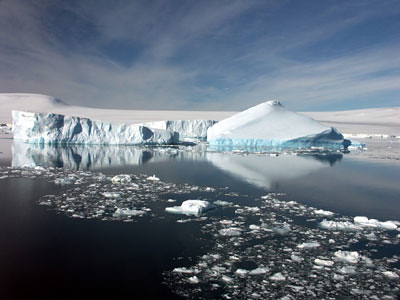
6. Antarctica
While murder, rape and robbery may not be a big problem in this part of the world, the hostile conditions are. Antarctica is home to some extreme weather conditions, with the mercury regularly dropping below -60 degrees Celsius (-100F) and winds tearing in at more than 100km/hr. If exposed to this weather for more than an hour, you will most certainly die. Antarctica has no hospitals, no food to forage and if you get lost, not a lot of hope. Stay with the tour groups. At least there is a McDonald’s at Scott Base if you manage to find it.


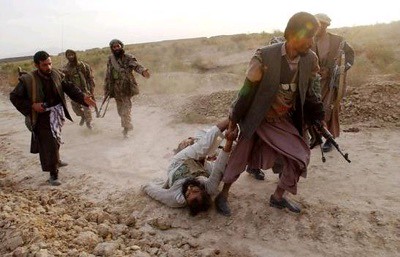
5. Afghanistan
This nation has for hundreds of years, been one of the world’s most strategically important and lusted after territories. However it remains one of the poorest, undeveloped and unstable. During the Soviet invasion, the Red Army planted more than 12 million landmines in Afghanistan. Hundreds of people are killed, shredded, and maimed each year due to these insidious devices. Following the Soviets came the Taliban, whose control meant women were banned from jobs and universities. In 2001, the United States overthrew the Taliban, but banditry, tribal rivalries and drug related violence has left the nation unstable. Suicide bombings are a constant threat, and nobody in Afghanistan is safe. The most lethal suicide attack occurred in Baghlan Province in November 2007, killing more than 70 people. Did I mention Afghanistan is also the world’s largest supplier of top grade hashish and opium?


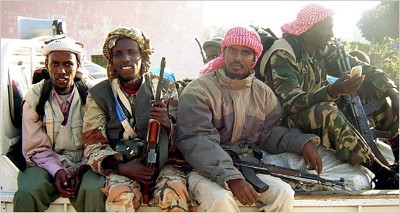
4. Somalia
Somalia is a failed state known for its anarchy, corruption, lack of government, and starvation. Travellers are warned against entering Somalia, the self-proclaimed “independent Republic of Somaliland” or even sailing near the Horn Of Africa. Pirates patrol these waters armed with AK-47s and will seize craft and hold crews to ransom. Inter-clan fighting has claimed thousands of lives in the north of the country, while territorial control in the capital, Mogadishu is carved up between many clans and warlords. Ethiopia attacked Islamic troops in Somalia in late 2006, resulting in hundreds of casualties and the internal displacement of thousands. Heck, if this place is too much for the Marines, what chance do you stand? Make sure your insurance is fully up to date.


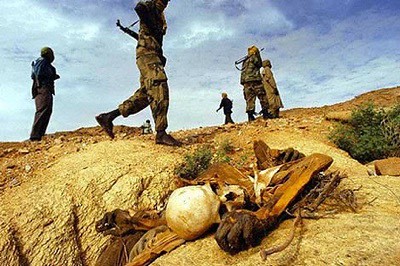
3. Sudan
Desperation, death and destruction are synonymous with Sudan. Terrorism is a mainstay of this nation, which has been controlled by Islamic military regimes since its independence. Some of the world’s most famous killers have earned their stripes in Sudan, finishing with degrees in car-bombing, rocket launching and genocide. Violence is rife in the Darfur region between government-backed militias, government troops and local insurgent groups. Sudan has been in open warfare with Chad partly due to the Darfur conflict. Since 2003, 230,000 Sudanese refugees have fled to eastern Chad from Darfur. More than two million have died during the 2 civil wars that spanned the last 50 years. Along with its bleak desert conditions, Sudan is one of the worst places on the planet.


2. Colombia
Kidnapping is the main worry in Colombia. There were 2338 kidnappings in Colombia in 1998. Of the victims, 138 were killed by their captors. Ranked fourth in the world for murders with 69.98/100000 in 2006, the popular targets are mayors, with dozens of them being slain each year. And of course, who can forget cocaine? Colombia supplies 75% of the world’s supply and thanks to Pablo Escobar and the Cali Cartel, paramilitary groups have waged war on the government in a bloody conflict with no end in sight. Even those working in the name of charity are not excluded from the frenzy. In 2005, 5 Catholic missionaries were murdered, down from 9 in 1999. Colombia’s beautiful coast and rugged mountains should make it a tourist paradise; instead it is among the most feared destinations you can visit.


1.Iraq

It doesn’t matter whether you are George Bush, Pele or Chuck Norris – you are not safe in Iraq. Despite its rich history and its oil reserves, it is a ruined nation that is wracked with violence, despair and confusion. Since 2003, the United States has occupied Iraq which has led to a civil war claiming the lives of more than 650 000 civilians. Al-Qaeda, Sunni insurgents, Shiite security forces, Kurdish rebels, American soldiers, Turkish troops and criminals are involved in a cycle of violence that unfortunately, will not abate any time soon. Improvised Explosive Devices (IEDs), Explosively Formed Penetrators (EFPs) and mines are a constant threat, as are suicide bombers who have slain hundreds. Kidnappings and random killings are reported with almost mind-numbing frequency. Since 2003, 2 million Iraqis have fled to neighbouring countries and another 1.9 million in Iraq remain internally displaced. Depleted uranium used as armour-piercing rounds will poison Iraqi civilians and US servicemen for decades. Truly, a hell on the Earth.[source]